

Via Luigi Rava, Rome: Urban Regeneration for the Common Good
In the Magliana district, a well-established residential neighborhood in southwestern Rome, the property complex at Via Luigi Rava 33–35 is

Reading Asset Value: 7 Keywords That Define Real Estate Due Diligence
In today’s Real Estate market, the quality of an investment is built long before execution begins. As institutional funds, asset

From Estimate to Strategy: Mitigating Risk in a Selective Real Estate Market
The Italian Real Estate market is undergoing a profound structural shift. Following years of aggressive expansion, the sector has entered a phase of consolidation and heightened selectivity. Today, institutional funds, asset management companies, and developers operate in an environment where every investment decision demands a rigorous evaluation of risk, return, and long-term asset resilience.
According to the latest Emerging Trends in Real Estate® Europe 2026 report by PwC and the Urban Land Institute, the risk-return paradigm has fundamentally changed. Investors are overwhelmingly prioritizing resilient markets, sound fundamentals, and high-quality assets to minimize risk exposure. In this tight environment, the pre-investment decision-making phase carries unprecedented strategic weight.

Sustainability is a choice, not an addition: making a project truly sustainable.
When we talk about sustainability in Real Estate, a common yet consequential misconception arises: the assumption that sustainability inherently requires innovation.
Consider innovative materials, green technologies, and energy performance certifications; whatever the objective, it is easy to forget that the answer is very often not to add something new, but to choose carefully among the alternatives already available on the market.
Every construction project presents a range of technical options across materials and building systems. However, these options do not contribute equally to optimizing investment costs. Some stem from client requirements, others from individual technical choices, and some simply from established project conventions. None of these choices, taken individually, guarantee genuine sustainability. The result is an amalgamation of “habitual” choices that weigh heavily on the budget without generating meaningful value for the asset.
Seen this way, sustainability appears not as an added value, but merely as a cost.
Time as the fundamental resource of real estate investment
In Real Estate, time is often perceived as an operational variable used exclusively to define a schedule. In reality, it has a structural impact on the economic balance of the investment and on the asset’s ability to generate value.
Industry data paint a clear picture: at the international level, most construction projects fail to meet both budgets and deadlines, with deviations that, in more complex projects, can significantly exceed twenty percent of initially estimated costs.
Delays, variations, and slowdowns are not mere process inefficiencies, but factors that erode margins, alter expected returns, and compromise the objectives of asset enhancement or divestment. For this reason, a strategic reading of the time variable becomes a central element in the decisions of funds, asset management companies, and developers.
The tender: a decisive moment for investment value
In the real estate investment lifecycle, the tender stage is the turning point for conditions that will affect asset quality and long-term sustainability.
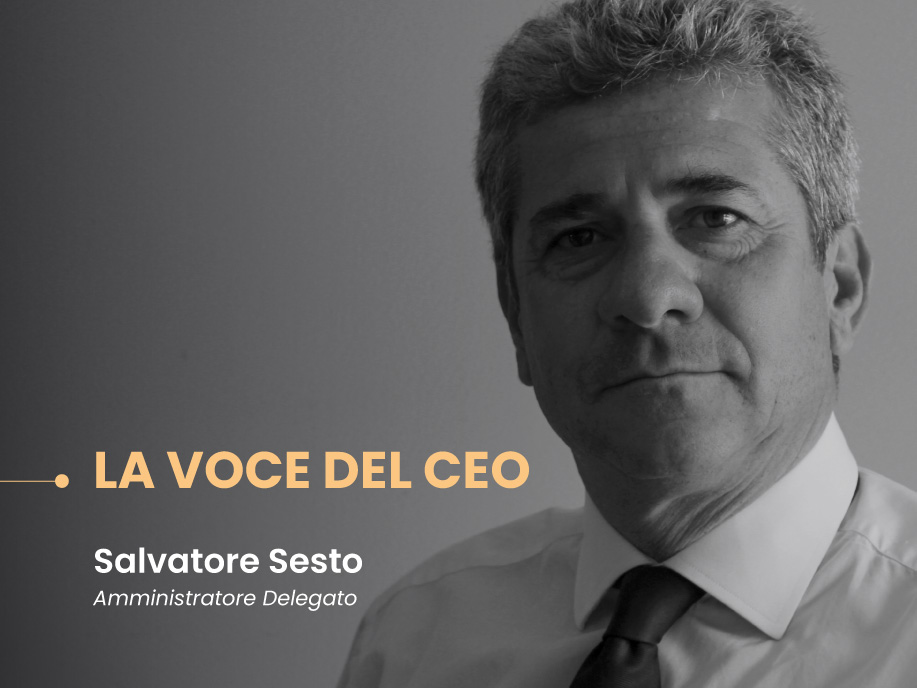
Far from being purely operational, this stage is instrumental in shaping the coherence between design and market requirements. On this point, Salvatore Sesto, CEO of SCI Value emphasises that:
“In itself, the tender is not a particularly complex moment, but it depends on how the bidding is organised and the alignment between administrative and technical documentation.”

Assessing asset sustainability from design to build
In today’s real estate market, sustainability is an economic factor that increasingly affects an investment’s value and ROI. Yet it’s still often treated as a mere design goal, or compliance certification requirement.
But the data paints a different picture. According to the World Green Building Council, over 70% of a building’s environmental impact is generated over its entire lifecycle, rather than just its development.

Warehouse 22, from logistics to healthcare: strategic asset repositioning
Within the former General Warehouses complex in Verona, the development of two multi-specialty medical centres in Warehouse 22 is part of a regeneration project that is turning a historic industrial area into an integrated hub.
The addition of the new examination rooms, one multidisciplinary and one dedicated to ophthalmology, strengthens the profile and appeal of the development and forms the core of the project.
Capex and Real Estate returns: where the value of the investment comes into play
In recent years, countless property portfolios have required refurbishments and upgrades. Investing in Capex is once again a key focus for funds and asset management companies, playing a crucial role in shaping both profitability and overall asset performance.
For the CEO of SCI Value, Mr Salvatore Sesto, engineer, the first point to clarify concerns its application.

Real Estate Due Diligence: The Primary Driver of Sustainability
The sustainability of a real estate investment is determined prior to acquisition, during the assessment of town planning compliance, state of repair, documentation consistency and exposure to future regulatory changes.
Due Diligence is crucial because it allows technical checks to be combined with financial-economic evaluation as part of a focused process. In an increasingly selective market, it directly affects expected returns, the bankability of the deal and the property’s ability to remain competitive over time.

Mastering complexity: Reverse Value Engineering RVE® in 7 key concepts
In today’s Real Estate market, efficiency is vital for making investments economically sustainable. Reverse Value Engineering RVE® is our answer: a proprietary SCI Value method that rethinks traditional optimisation by focusing first on the completed project or the desired outcome.
Let’s break it down into the seven key concepts that shape this approach.