
In Real Estate, time is often perceived as an operational variable used exclusively to define a schedule. In reality, it has a structural impact on the economic balance of the investment and on the asset’s ability to generate value.
Industry data paint a clear picture: at the international level, most construction projects fail to meet both budgets and deadlines, with deviations that, in more complex projects, can significantly exceed twenty percent of initially estimated costs.
Delays, variations, and slowdowns are not mere process inefficiencies, but factors that erode margins, alter expected returns, and compromise the objectives of asset enhancement or divestment. For this reason, a strategic reading of the time variable becomes a central element in the decisions of funds, asset management companies, and developers.
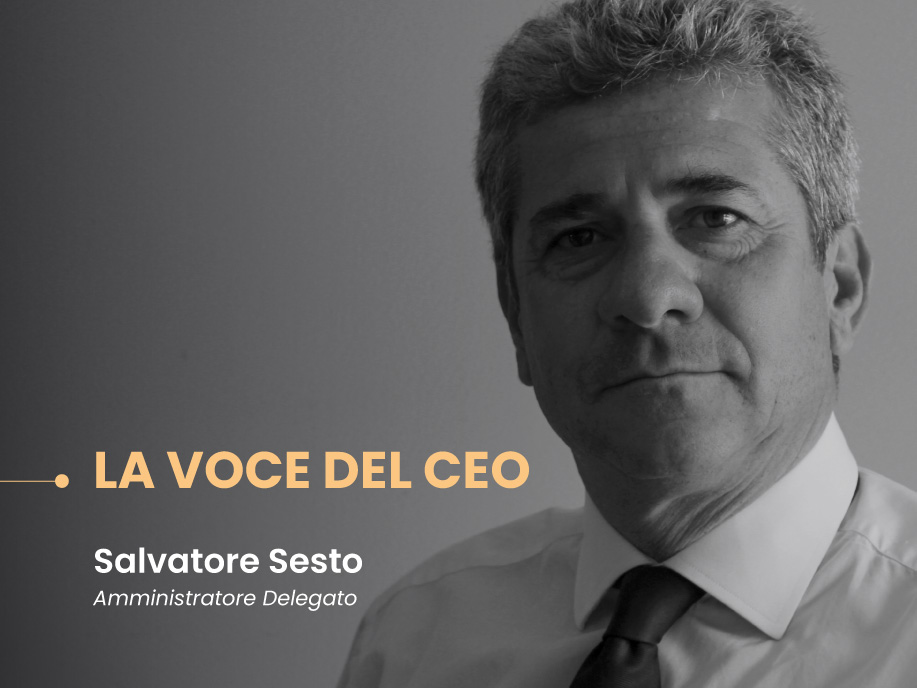
For Eng. Salvatore Sesto, CEO of SCI Value, the starting point is a genuine redefinition of the concept of time: time is not a backdrop, but the fundamental resource of investment.
Time as an economic driver
Defining time as a fundamental resource means giving it the same weight as a cost or a revenue in shaping returns. Throughout the lifecycle of a real estate project, every month of delay translates into additional financial costs, a postponed entry into operation of the asset, and a dilution of the Internal Rate of Return (IRR) expected by the investor. It is from this perspective that Eng. Sesto frames the work of the Reverse Value Engineering RVE® method on the Capex study phase, where the production times of each individual cost item become the subject of detailed analysis:
“Time is not a simple operational variable: it is a fundamental resource. It is not a backdrop to project management, but one of the main drivers determining whether an investment will create value or erode capital. At SCI Value, with our RVE® method, we intervene in the Capex study phase and, among the variables we analyse, are the production times of each individual cost item. There, we identify the economies needed for the proper execution of the work.”
In this way, time analysis enters directly into the economic structure of the investment, right from the initial phases.
The real impact of delays and variations
In large scale projects, delays and variations are recurring dynamics, and they are not always imputable to flawed design. The most frequent causes include in progress changes, unforeseen site conditions, supply issues, and misalignments in coordination among the parties involved. Even among structured operators, only a minority of projects fall within the originally planned cost and time parameters, a sign of how widespread the gap between forecast and outcome has become.
Technical literature would suggest that a well constructed executive design should leave no room for the unexpected; practice tells a different story. As Eng. Sesto observes:
“If we were to rely on paper, the executive design should not foresee unexpected events. But reality is quite different: many projects hold surprises, and often are not imputable to faulty design. There are, however, corrective tools, and among these a proper Capex analysis and an appropriate metric verification can shield the investment from potential delays.”
The point is not to eliminate the unexpected, but to build a framework that makes it manageable, thereby reducing the economic impact that deviations may have on the original plan.
Project, budget, and asset objectives
Design, execution, and the future life of the property are not separate phases, but links in the same chain. The quality with which time is governed in each phase is directly reflected in the following ones, all the way through to the bankability of the asset and its valuation at exit. It is an idea leading to a precise consequence, well summarised by Eng. Sesto: value does not lie in the formal compliance with Capex, but in the engineering that underpins them.
“They are all interconnected phases. The quality of a property undergoing redevelopment or new construction must absolutely take many variables into account. Coordination between design, execution, and the future life of the asset is tightly linked. Compliance with Capex may not be the solution: value lies in engineering. From this, a properly studied and engineered project delivers maximum value for the investor.”
In this light, scheduling time with coherence between phases becomes the binding element connecting the business plan to expected margins.
Time as a financial metric
There is a substantial difference between drafting a schedule and turning time into a financial metric. The first describes a sequence of activities; the second reads each technical choice in terms of when it generates economic return. In this shift, SCI Value’s approach takes shape, built starting from the end result and from the decisions that make it possible:
“For us at SCI Value, integrating time does not simply mean drafting a schedule: it means turning time into a financial metric. We help the investor understand not only how much the project costs, but when each individual technical decision will generate the maximum economic return relative to the set objectives. Starting from the definition of the project at executive level to develop Value Engineering RVE® exponentially reduces, for the Client, technical and economic unforeseen events, without undermining the project’s logic. By working on variables such as materials and construction systems, installation methods, and third party impacts such as transport, we confirm the engineering approach but reduce pre tender costs.”
In this way, time stops being a factor to endure and becomes a lever for controlling the investment.It is in scenarios such as this that SCI Value’s approach finds its fullest expression: governing the time variable, before even managing it, through a structured method like Reverse Value Engineering RVE®, which integrates engineering, Capex analysis, and financial logic into a single decision making process, turning time into an essential asset.

